Ecocriticism and Critical Race Theory (CRT), while different in their immediate area of interest, are very similar in the way they look at subjects with a critical perception of noticing the gaps and inequalities that are present within our modern culture. Both theories of criticism focus on intersectionalities between subjects, and they both attempt to explain or criticize the foundational models that tend to compartmentalize identities and representation within our society.
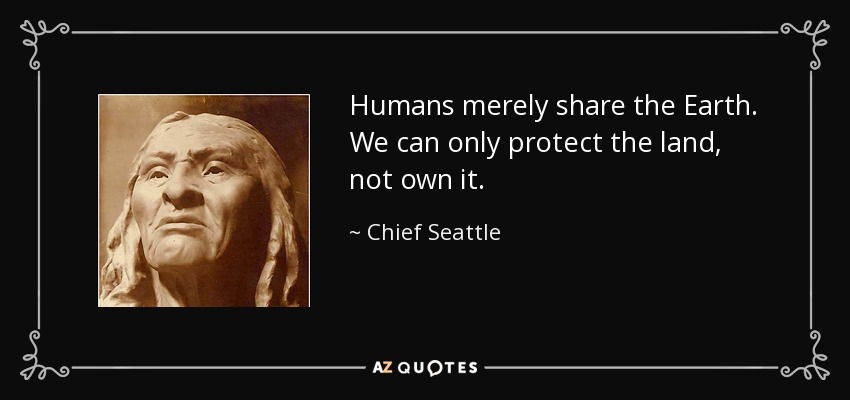
An area where Ecocriticism and CRT overlap can be seen in the way people among different racialized groups have historically engaged with the environment. In the chapter titled “Principles of Earth Democracy,” writer Vandana Shiva explores this history through the growth of property development in America. She begins by presenting a speech from a Native American Chief in 1848, he asks, “How can you buy or sell the sky, the warmth of the land? The idea is strange to us.”
It’s no secret that anglo-individuals have historically had a very different relationship with the land than indigenous peoples. Colonization, while some historians claim was motivated by religious “enlightenment” to “uncivilized beings,” was really and ultimately a movement to “rape and plunder:” to exploit the land for resources that bring wealth and prosperity to individuals already in power.
This history has perpetuated certain ideologies and structures within our culture that trickle down into the way we live. A great example is the modern housing market; the great gap between penthouse living and living on the streets, and this gap has created immense inequality for access to land among marginalized groups, especially people of color.
Shannon Prince addresses this inequity in her TedTalk “Green is the new black.” She mentions, “In California there’s extremely unequal access to green space. In one area of black Los Angeles, there’s only one playground for every 23,000 children. In LA’s white neighborhoods, there are 32 acres of park per 1,000 people” compared to the 1.7 acres in black neighborhoods (Prince). She then goes on to talk about the incredible benefits of green space exposure and how limiting environmental access to impoverished communities only continues to hinder the potential for progress and growth within those communities.
With all of this in consideration, the differences between Ecocriticism and CRT start to appear not quite so different after all. In fact, they both bring to light some very important issues related to dominant cultures. Just as some have historically and even still consider human as superior to Earth’s natural ecosystems, people have just as easily considered certain racial groups to be superior over others. But Ecocriticism and CRT remind scholars to look at things differently, to notice these gaps of inequitable representation, and to look for positive ways to promote change through the education of others.

 Melissa Voita - JMC 309
Hello Melissa,
Great post. I like that you mentioned that ownership can lead to inequality and the difference in green space in LA. In the same TED talk I believe it was mentioned that lack of green space even impacted birth weight. Hopefully we start seeing the implementation of more green areas in the larger cities in California.
LikeLiked by 1 person
Melissa,
I like your analysis about the disparity between white and black neighborhoods in LA. CA has an enormous homeless problem, which seems odd for a sate with so much money. It seems that no matter what the state does it never works or is not nearly enough. There are many things the state could do to reduce inequity, building parks is a cheap and easy way to benefit communities.
LikeLiked by 1 person