Final Post: A CRT and Ecocritical analysis of Sleep Dealers

Sleep Dealers is a SciFi thriller that addresses themes of artificial intelligence technology, racial inequality through exploitation of labor, and ecological impacts on farming. This bilingual hour-and-a-half long film was released in 2008 by Alex Rivera. It begins with a young hacker, Memo, living on his father’s milpa in Oaxaca, Mexico. The futuristic setting is placed in a society where people are connected to AI technology. People with “nodes” can hook into various technology to provide real-world labor through machinery. For more on the plot, watch the film for yourself on Youtube or read a basic summary here.

Through the various connections to farming, technology, and representation of labor, Sleep Dealers covers many themes that overlap between ideas of ecocriticism and Critical Race Theory. In the movie, it becomes clear that Memo’s father has a close relationship with the land. It becomes known to the audience that he has owned and been farming on his land for many years. In those times, there was plenty of water provided by a river in the city; however, before Memo was born, the government took away water rights from the citizens by building a dam and forcing locals to pay for water. This scenario provides a believable scenario for the way water might be restricted to people in the future, as many countries currently suffer from water scarcity and are currently facing water restrictions within their communities.

After a series of events that lead to the murder of Memo’s father, Memo finds himself in a position where he needs to find work to support his family, so he goes into the city to become a Sleep Dealer, a person who works through AI technology. Memo enters into a facility, where people connect to their nodes and perform a variety of jobs. Memo himself works as construction builder. As he walks into the factory, a worker tells him, “This is the American Dream. We give the United States everything they’ve always wanted– all the work, without the workers.”

In today’s culture, this kind of mentality is unfortunately very believable. It makes sense that in this type society, where workers are connected to AI, the work itself is being outsourced to other countries, where low-income people are being exploited for their labor. The United States already does this in countries like Mexico today. Throughout the movie, we watch as Memo becomes increasingly fatigued by the technology, and we see that older workers have actually gone blind from the technology. Similar to today, the hardworking lower-class Mexicans are being overworked by elitist Americans to the point where it severely affects their physical health. I think this movie does a really good job of depicting a type of future that is both believable as is compares to our current standards, and well as terrifying in the way is enlightens us to the structural injustice we have in the way we currently run our society.

In edition to the exploitation of peoples, this movie also depicts the exploitation of land. We see this in the dam that has been built in Memo’s home town in the way the people are forced to pay for a basic necessity like water. We also see, through Memo’s father, resistance to this exploitation, as there is still memory of a time when such things were not restricted by the government. In his death, we also see how much the land is easily destroyed by drones in this world, as the government seems to find no problem in completely blowing up any person or space that objects to their values.

Overall, this movie is a great film for many reasons. Not only does it engage the audience with important issues related to how we treat individuals and the world around us, but it also presents these ideas in a chilling way, that represents a possible future for our world if we aren’t careful. If you don’t think AI technology is feasible in our life time, you might want to check out this most recent podcast with Joe Rogan and Elon Musk, where Musk relays the work he has already been doing to make AI technology integrated into the lives of individuals sooner than we think. In a world where these kinds of technological advances seem inevitable, I think movies like Sleep Dealer are a great way to remind people of the many injustices to freedom and the dangers that going down such a path could lead.
Post 9: Intersections of CRT and Ecocriticism

Ecocriticism and Critical Race Theory (CRT), while different in their immediate area of interest, are very similar in the way they look at subjects with a critical perception of noticing the gaps and inequalities that are present within our modern culture. Both theories of criticism focus on intersectionalities between subjects, and they both attempt to explain or criticize the foundational models that tend to compartmentalize identities and representation within our society.

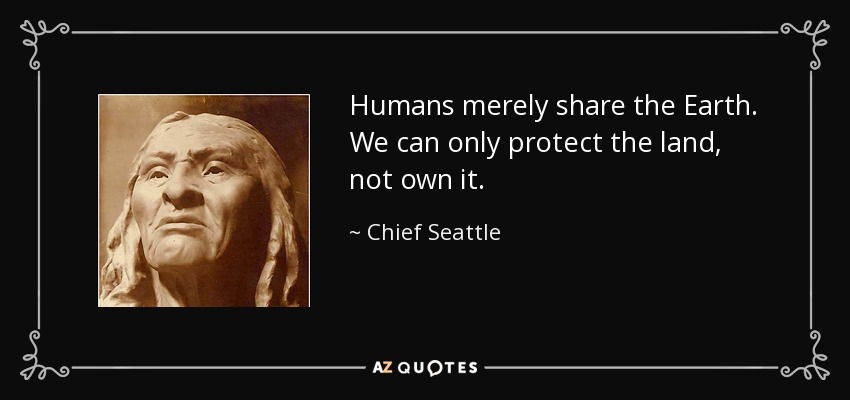
An area where Ecocriticism and CRT overlap can be seen in the way people among different racialized groups have historically engaged with the environment. In the chapter titled “Principles of Earth Democracy,” writer Vandana Shiva explores this history through the growth of property development in America. She begins by presenting a speech from a Native American Chief in 1848, he asks, “How can you buy or sell the sky, the warmth of the land? The idea is strange to us.”

It’s no secret that anglo-individuals have historically had a very different relationship with the land than indigenous peoples. Colonization, while some historians claim was motivated by religious “enlightenment” to “uncivilized beings,” was really and ultimately a movement to “rape and plunder:” to exploit the land for resources that bring wealth and prosperity to individuals already in power.

This history has perpetuated certain ideologies and structures within our culture that trickle down into the way we live. A great example is the modern housing market; the great gap between penthouse living and living on the streets, and this gap has created immense inequality for access to land among marginalized groups, especially people of color.

Shannon Prince addresses this inequity in her TedTalk “Green is the new black.” She mentions, “In California there’s extremely unequal access to green space. In one area of black Los Angeles, there’s only one playground for every 23,000 children. In LA’s white neighborhoods, there are 32 acres of park per 1,000 people” compared to the 1.7 acres in black neighborhoods (Prince). She then goes on to talk about the incredible benefits of green space exposure and how limiting environmental access to impoverished communities only continues to hinder the potential for progress and growth within those communities.

With all of this in consideration, the differences between Ecocriticism and CRT start to appear not quite so different after all. In fact, they both bring to light some very important issues related to dominant cultures. Just as some have historically and even still consider human as superior to Earth’s natural ecosystems, people have just as easily considered certain racial groups to be superior over others. But Ecocriticism and CRT remind scholars to look at things differently, to notice these gaps of inequitable representation, and to look for positive ways to promote change through the education of others.

Post 8: Avatar and Ecocriticism

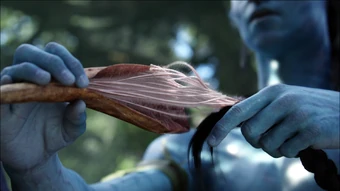
For those who have seen James Cameron’s Avatar, it becomes hard to deny that the film offers an ecological perspective with an environmental message. The Na’vi, the native people of the planet Pandora, are portrayed as enlightened individuals, interconnected with the synchronicities of nature. In contrast, the humans from Earth are portrayed as profit-hungry conquistadors, reliant on the brute power of technology. However, the human race is offered some repent, through the “tragic hero” Jake Sully and his trustworthy comrades.

In a chapter titled “Waking Up From Avatar,” Professor Deidre Pike analyzes the character of Jake Sully. She describes him in a way akin to Aristotle’s perspective, as a man of “high moral order,” who has been slighted by the world around him through his fair share of tragedies. In this way, he is unlike the power-hungry conquistadors: not motivated by power, but motivated by a desire to be like everyone else (to walk again). It isn’t until his connection builds with the Neytiri and Na’vi when he realizes, that being like “everyone else” means subscribing to the moral good and being one with the nature around you.

From an Ecofeminist perspective, the film opens itself into rarely charted territory. A modern feminist might find a sense of pride and power in the way that the women of the Na’vi are portrayed. Gender roles don’t seem to follow the path of the patriarchy in Na’vi culture. In fact, Neytiri fights, flies, and defends alongside the men of her tribe, as do many other females in their culture. She acts as a guide into the realm of Pandora for Jake, and it is her who seemingly holds the upper hand of knowledge. Additionally, her mother is a very important member of the tribe, as she is respected for her shamanistic-like visions and perspective. The female human characters of the film are portrayed as mildly admirable as well. Grace is an established scientist, and Trudy, well she represents your stereotypical bad ass bitch, guns and boobs out for all. I’m not saying these characters are perfect in the eyes of feminism, but they do seem to represent a characterization of woman we aren’t used to seeing in films about capitalist colonization.

The above perspective leans more toward a typical feminist interpretation, which of course would require even more digging for meaning; however, an Ecofeminist perspective would look at the film from an even different angle. In a chapter titled “Ecofeminist Literacy Criticism,” writer Gretchen T. Legler discusses the common representation of nature as feminine. In English culture, we have the common perception of “Mother Nature,” and many other cultures across history have given feminine quality to nature’s attributes.

Something very interesting in Avatar is that the Na’vi people also make nature feminine. The deity, “Eywa,” which they believe controls the various synapses between nature’s interconnectedness on Pandora, is referred to by the Na’vi as “she.” As mentioned, the shaman-like individual within their culture, who channels the energy of of Eywa is also a female. I think this relates to Biblical perceptions of nature and the feminine. Eve (before she commits sin) is portrayed as pure, untouched, and with great potential for knowledge. Likewise, nature is often portrayed as such. The nature in Pandora is worshiped for it’s beauty, much like women in human culture are worshiped for theirs.

This perception of the feminine as it applies to nature in Pandora opens a figurative Pandora’s box into the many interpretations and potential criticisms that can be made. But, for the sake of brevity, I will leave the post here and ask for your thoughts instead. What message do you think Cameron tries to portray in the way that the feminine is portrayed in the film? What links between the representations of the female characters in the story can be made to the link of the feminine identity represented in the nature of the film? Leave your thoughts in the comments below, I look forward to reading them. 🙂

Post 7: Nausicaä of the Valley of the Wind

Hayao Miyazaki’s, Nausicaä of the Valley of the Wind, is an anime film from 1982 that features commentary on human interaction with the environment that is still relevant today. The film begins by introducing the audience to Lord Trupa, a traveller who visits neighboring cities only to discover that many of them have been consumed and destroyed by “The Toxic Jungle.” We learn that the Toxic Jungle came to be around a thousand years ago, it has many poisonous plants, and is swarming with many types of insects. The most fearsome of these insects appears to be the Ohmu, whose eyes can become “blind with rage,” when they are upset by human interference. 

After being introduced to Lord Trupa and his quest, we are then transported into the forest itself, where we find Princess Nausicaä. We learn that the Princess is fascinated by the plants in the toxic jungle, as she collects samples of spores and even comes across the skeleton of an Ohmu. We later find that she has been collecting these samples to research a cure for her father, the King who is bedridden with illness. In the midst of her collecting specimens, the Princess hears an Ohmu attack. She jumps onto her handy glider and flies over to the attack, where she finds Lord Trupa desperately trying to escape. Rather than counter-attack the Ohmu with violence, the Princess works to calm down the Ohmu and direct them back into the forest. In the end, Lord Trupa is fascinated by the Princess’ connection to animals and in her ability to resolve conflict without the use of violence. 

In an Ecocritical analysis of Nausicaä of the Valley of the Wind, author Pacharawan Boonpromkul looks into four ecocritical areas of interest: the depiction of the landscape, the question of land entitlement, toxicity and related discourse, and the animals. In this article, Boonpromkul hopes to prove how the film’s representation of these things all contribute to the film’s relevance in the topic of ecocriticism even today. For the sake of time, I will not cover all topics addressed within this article, but I will mention some of the author’s ideas that I think are important to the film’s environmental message. 

The article talks about the character of Nausicaä and her particular fondness for the plants in the toxic jungle. As a viewer, I saw a huge contradiction in Nausicaä’s character. On one hand, she cries for the baby Ohmu and doesn’t want to partake in violence. On the other hand, she is will to extract material from the carcass of the Ohmu to be used for creating swords. The article even mentions this contradiction by saying, “it is difficult to refute that the extent of her concern toward the natural world is overridden by pervasive and hostile elements of which she actually has little control” (140). I thought this duality to the character of Nausicaä was interesting because at first, she is perceived to be one who cares for the plants and creatures of the toxic jungle; however, we later find that her care is deeply rooted in her own personal pursuits. 

I want to hear what you think about the character of Nausicaä. Do you think she is consciously motivated by wanting to improve the state of the environment? Or is she just one who hopes to use the environment for her own personal gain?

Post 6: Okja and Ecocriticism

In today’s meat industry, consumption is happening at a much faster rate than production. To meet this need, people are turning to science, in the hope the genetically modified meats can serve as a “solution” to meet the needs of meat consumption. In the controversy surrounding genetically modified meats, those in favor of the practice tend to sell it as a “more ethical” and “sustainable” approach (see this article). 

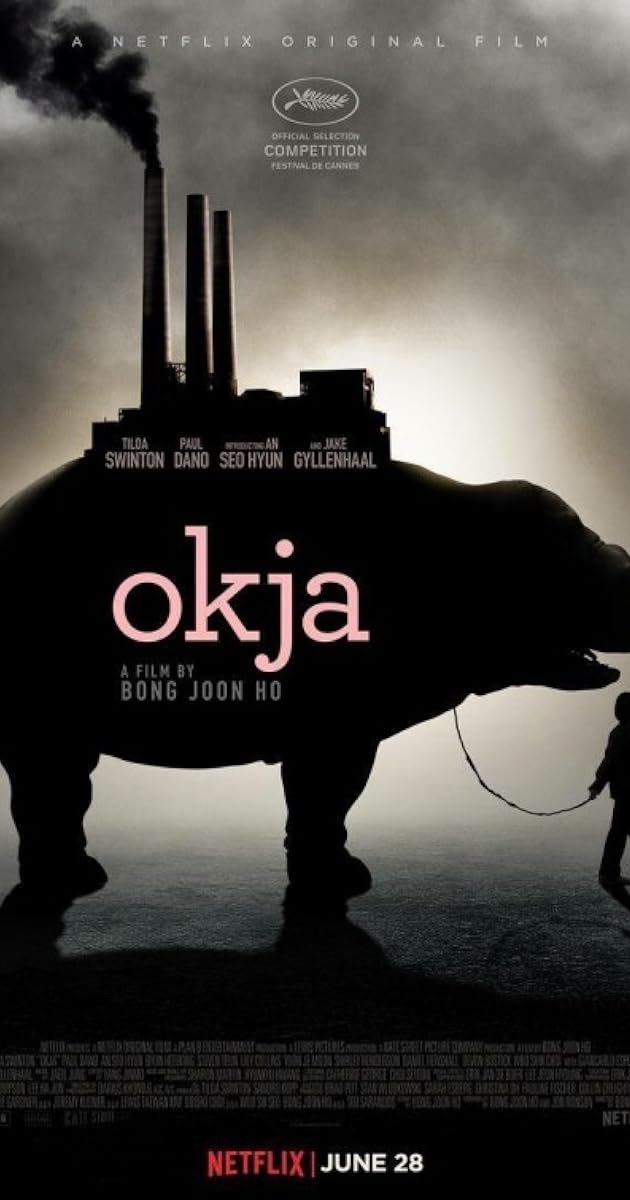
However, the movie Okja presents a more realistic take on the repercussions of genetically modified animals, by reminding us that even genetically engineered animals still have feelings AND the meat processing industry still operates with inhumane practices. 

The film begins with an introduction into Mirando Corp, a business that historically fits into the worst kinds of capitalism. Only now, Mirando Corp is being rebranded by the daughter of the company’s owner, Lucy. She tries to reframe Mirando Corp as a company of the future. In a great marketing platform, Lucy gifts 26 genetically modified “super pigs” to farmers all over the world, where they will be raised for the next ten years, and eventually, a winner will be chosen. To the audience, this plan seems like a brilliant ploy to normalize genetically modified meat into American culture, so that, in the next ten years, they can move on with the production of genetically modified meats without so much as a hiccup.

The film then flashes forward and jumps across the world to ten years later in Korea, where we meet Mija and one of the 26 super pigs, Okja. Up until this point in the film, the viewer has only been exposed to the grey factory image of corporate capitalism. It isn’t until we meet Mija and Okja that the viewer sees a more natural side. Ecocriticism encourages the viewer to look into the ways nature is presented within a film. In Okja, the only nature we are really exposed to is in the homeland of Mija and Okja, which is in Korea. When the Mirando Corp people come to visit their farm, we learn that it is difficult to get to. In this way, the nature of this film is presented as inaccessible to all, peaceful, and devoid of any corporate/ big city living. 

When Mirando Corp comes to take Okja away as the winner for their super pig contest, Mija is overcome with anger. She did not expect to have Okja taken away, as her grandfather did not inform her of this until it was too late. For the remainder of the film, Mija’s mission is to return Okja back home to their farm in the mountains, but this is sadly not achieved without some terrible obstacles. 

In an interview about the film, director Bong Joon-ho mentions, “Films either show animals as soulmates or else we see them in documentaries being butchered. I wanted to merge those worlds. The division makes us comfortable but the reality is that they are the same animal.” It is this discomfort that the film seems to be trying to invoke in the viewer. Through the story of Okja, the viewer realizes that even genetically modified animals still have feelings and the ability to form attachments with humans.

The film seems to be reminding viewers of their own involvement in the meat industry– it doesn’t just start and end with the packaged meat we buy in the grocery store. Instead, the film encourages the viewer to step outside of their mindless consumption and begin to question: where is it coming from? How is it being made? And most importantly, is it being made ethically? These are some of the many questions that animal activists, such as the Animal Liberation Front (ALF), have been trying to get people to ask for many years. Okja takes all of these issues outside of the PETA pamphlet and aims to make them more real for the audience through the heart-wrenching friendship of Mija and Okja. In this way, the film can be seen as a criticism of not only the consumption of meat in America, but also a criticism of our humanity.

Post 5: Ecocriticism

The Purdue Owl website provides a brief description of “Ecocriticism,” which is described by Glotfelty as “the study of the relationship between literature and the physical environment.” The Purdue webpage shows the history of the development of Ecocriticism and separates the ways of thinking about it into two waves (the old and the new). Still, the purpose of Ecocriticism remains motivated by the same ideas: “Ecocriticism has been and continues to be an ‘earth-centered approach’… the complex intersections between environment and culture, believing that ‘human culture is connected to the physical world, affecting it and affected by it.’”

It is with this general understanding of Ecocriticism that we turn to look at the most recent Snickers ad, played during the 2020 Super Bowl. The commercial feature the hashtag #SnickersFixtheWorld and feature a musical number with lyrics that seem to suggest Snickers’ ability to change the world and revert the issues of our planet’s destruction. Through the lyrics, the audience seems to understand that Snickers is taking a comical, even cynical approach toward human interaction with the planet, and seems to be promoting a message of global awareness. 

The song begins with the various ways in which “the world is out of sorts,” with one example being that “Babies [are] named after produce” or almost anyone is taking dirty pictures. As the song progresses, individuals from all walks of life are shown congregating toward this massive hole. The idea is that a giant Snicker will be dropped into the whole, thus solving all of our problems. The irony in this is that Snickers most definitely cannot solve all problems, and this irony is represented in the shrug we get from one of the actors when a child asks, “Will it work?” 

With this approach (and other representations of individuals within the commercial), I think Snickers is aligning with the ideas represented by William Rueckert who writes, “Culture– one of our greatest achievements wherever we have gone– has often fed like a great predator and parasite upon nature and never entered into a reciprocating energy-transfer…” (119). Snickers seems to be representing this irony between the relationship of culture and nature. They seem to be acknowledging the way our society seems to ignore the quality of the environment in lieu of being distracted by way less important things. The idea that everyone here is gathering to support an effort that might not work is also a criticism of our culture. 

An Eco-critic might look at this ad from a variety of angles. They might find it a funny, well-delivered representation of the ironic relationship between culture and nature in our American society. Additionally, they might ask additional questions. Is Snickers considerably an eco-friendly company by the way they manufacture their product? In a way, are they also contributors to the problem they represent? Are they acknowledging this contribution? 

This is where my own analysis seems to get a little fuzzy. While I understand the message they are going for, do I believe it? Is Snickers doing anything (besides making commercials) to “fix the world.” Do I believe they truly want to see change? Or are they just another company taking advantage through a brilliant marketing campaign? What do you think? Did these questions come to mind for you? I want to hear your thoughts on the matter. Share your ideas in the comments below. 

Post 4: Babel

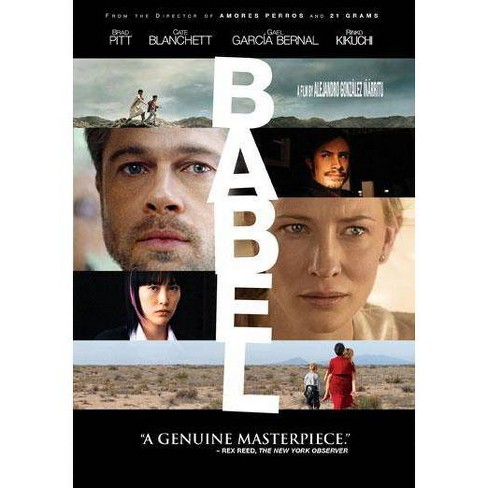
Up until being assigned to watch Babel for the purpose of this course, I had neither seen nor even heard of this film. This was surprising to me since the two American stars of the film, Cate Blanchett and Brad Pitt, are so consistently prevalent in the face of modern Hollywood. It’s rare when a movie they come out with doesn’t initiate an extensive amount of “in-your-face” marketing. However, after watching the film for myself, and doing some research on the film’s release, I can now see why it had escaped my attention. 

The film was only first released in seven theaters around the world, so of course the opening night wouldn’t have attracted as much attention as a film simultaneously released in theaters all over the world. Nearly a week later, the film expanded into 35 theaters, and hit just over 1,200 theaters in the week to follow. As such, it doesn’t seem like this film would have been in the topic of conversation. Since the film observes complex topics related to miscommunication, racial biases, loss, and the ripple effect of a person’s actions, I can see why this film was only marginally observed by critics. 

After watching this film, I felt a deep sense of unease. The American film industry has taught me to seek resolution, to find a happy ending in even the darkest of stories, and Babel upsets this expectation. It refuses to give the audience a positive resolution, just as it refuses to make the audience feel comforted by any promise of a better outcome for any of the characters. 

I think this feeling of unease is intentional. I think the makers of this film wanted to share a story that doesn’t fit into the norms of a regular tale. At the heart of it, I think this story is a story related to the idea of the butterfly effect. There is this idea that the event of something in one place can have ripple effects that affect the happenings of events in another. In this case, we see how the actions of two young boys in Morocco can inadvertently affect the deportation of a Mexican woman. The people involved never have any direct contact with one another, yet the actions of one can most certainly affect the other. 

As I struggled to make meaning of this film, I turned to the voices of academic scholars who have analyzed this film through their educated perspectives. As suggested by our teacher, I came across an analysis written by Todd McGowan titled “The Contingency of Connection: The Path to Politicization in ‘Babel.'” In this article he writes about the film’s use of events, and how they are carefully structured to ignite a more political message than a spiritual one. He writes, “Films like Babel… undermine the ideological idea of self-determination and control over one’s destiny. But subverting the idea of individual agency often goes hand in hand with locating agency in a hidden force, lurking behind nominal authority figures, that pulls all the strings, and this is what Babel avoids. There is no hidden God…” (McGowan 7)

Through his analysis, McGowan shows how a film like Babel can be seen as a politicization, which encourages the viewer to think deeply about current political issues and related concerns. He then goes into the topic of the “Other” and presents this concept as a theme ever-present in the film’s story. In his analysis, the “Other” represents the unknown, or the way it is unknown how one person’s actions can affect another’s. 

When looking at the film this way, I can gain an even further understanding into why it wasn’t the hot topic of conversation when it was released. Modern (American) audience members don’t want to watch a story that’s political, a story that challenges their worldview, or suggests that their actions will have unintended consequences. In this way, I think this makes the film even more poignant and politicized, in that it encourages those who do watch, to find their own message to take away. Not only a message to take away, but a message that one can act upon for themselves in the way they view their own actions and question how it might affect the lives of others. 

Post 3: Black Panther

Power is not given to you. You have to take it.

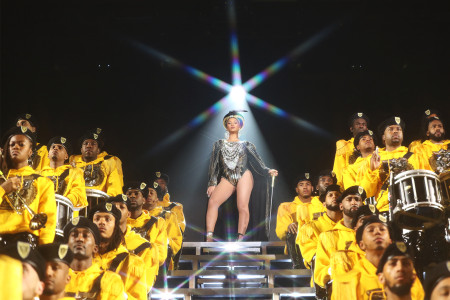
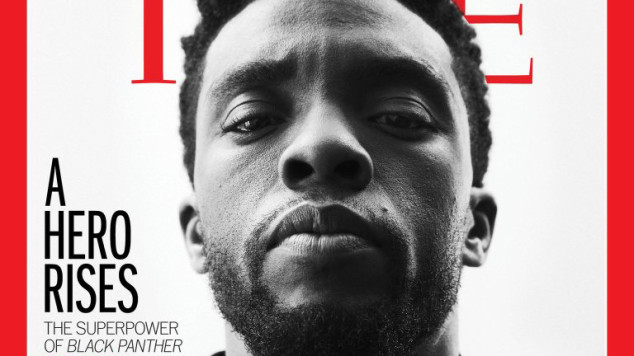
When Black Panther came out in 2018, I remember reading an article (which of course I can’t seem to find now) about how the year itself was such a incredible time for black cultural identity in America. 2018 was the year Beyoncé headlined Coachella as the first black female artist to do so (aka “Beychella”). 2018 was also a big year for black success in politics, the Olympics, and at many music, film, and television award shows. That same year, Netflixreleased it’s most upsetting season of Orange is the New Black, which thematically spoke of authoritative abuse of power against people of color (and women), while in the real-world, such abuses of power were being called national attention to through the Black Lives Matter movement. 

In all, I remember the article mentioning that 2018 was a time of celebration for black identity in America, a celebration which they attributed to the substantial success of Black Panther‘s release. But they also underlined this cause for celebration with the sobering question: Why did it take this long? Why did it take so long for an icon in the form of a black superhero to take the world by storm at the capacity of Black Panther? As the article mentioned, the length of time to accomplish this success only speaks toward the active effort to continuously oppress black identity within our society. However, since then, I think we are seeing an active effort in the media (especially Netflix) to advocate for the recognition and representation of people of color in film and television. 

Most of the readings this week seemed to acknowledge the release of Black Panther as a pivotal success for the emergence of black identity into the forefront of mainstream media. An example of this positive review can be read in the New York Times article “Why ‘Black Panther’ Is a Defining Moment for Black America.” However, I was very intrigued by the argument against this notion, which was brought to light in the article “‘Black Panther’ Is Not the Movie We Deserve” presented in the Boston Review.

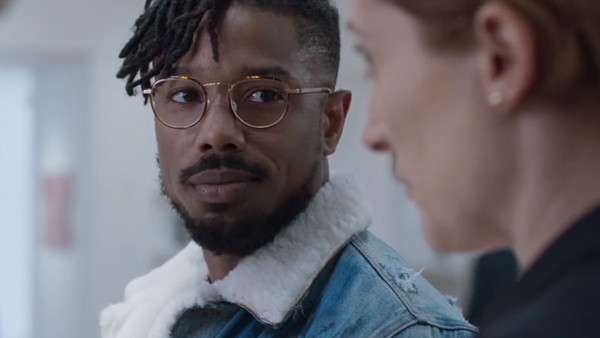
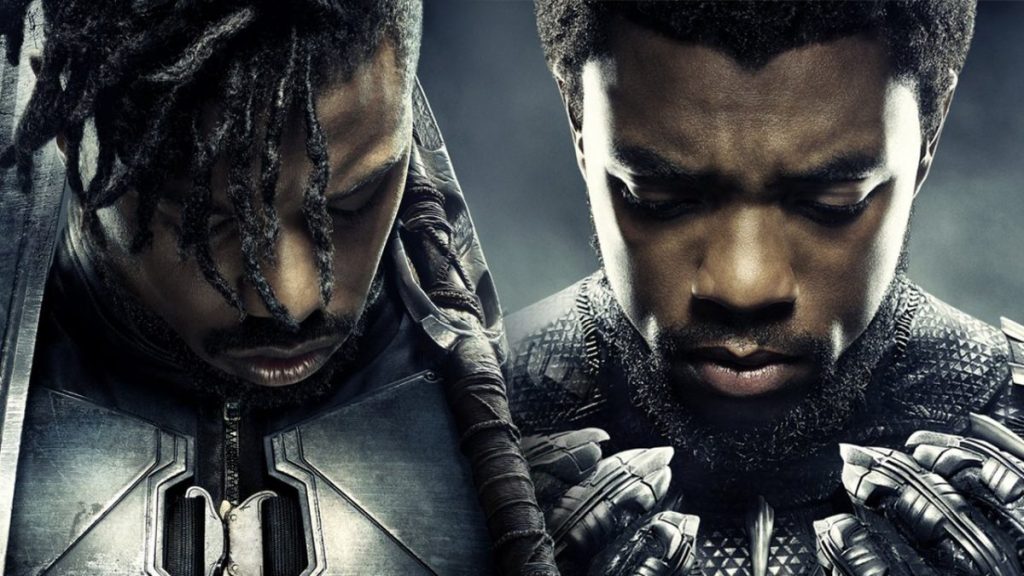
Up until coming across this article, I had only read positive things in response to Black Panther, so it was interesting to read about the movie from a different perspective. The main argument of this article is that the movie contributes to “a shocking devaluation of black American men” (Lebron). The writer bases this criticism on the story-line of Killlmonger and the backstory that led to his life of villainy. He writes, “we are given a movie about black empowerment where the only redeemed blacks are African nobles. They safeguard virtue and goodness against the threat not of white Americans or Europeans, but a black American man, the most dangerous person in the world.”

While I can see his argument, I would argue in return that this was not the message that myself and others took away from Killmonger’s story at all. In fact, I really liked his story-line because it sheds light on the systematic patterns of inequality that lead to violence in under-served communities. However, I’m not saying the writer of this article is wrong either. The writer of this article, Christopher Lebron, is after all, applying his criticism from the highly esteemed lens of his own black identity in combination with his educational background related to the field. Who am I, a white girl, to say, “Oh no, I think you’re wrong about how you interpret the male black experience”? 

“How do you think your ancestors got these? You think they paid a fair price? Or did they take it, like they took everything else?”

I would just say in response to this article, that the movie seems to have greater value in its strengths than in its weaknesses, and that the character of Killmonger is actually “a villain” that many people in our culture can understand because it fits into a pattern that affects men of all colors and identities in American society. And while it does seem to lean toward the degradation of representing the male black identity in America, I think that Killmonger’s story as a whole holds a greater resonance and value that speaks toward bigger issues of systemic injustice within low-income communities and how it contributes to the perpetuation of violence and hatred that we have in our society. 

The driving force of Lebron’s argument lies in the proof that the African identities represented within the film are held to a higher respect than the American black male identities. However, one should not forget the leading factors that created the mentality of Killmonger. As we learn later (through flashbacks) in the film, some of the contributing events that lead to Killmonger’s eventual villainy stemmed from the ways he had been forgotten about and eventually left behind by his own African relatives; thus, his “angry black male” identity is a product of not only American society, but also the rejection he receives from his own cultural homeland of Africa.

In this way, I would argue that the uplifting of the African identity as it compares to Lebron’s proposed degradation of the black American male identity creates a complex yet evenly distributed balance between the two representations. I mean, are these African nobles, who abandon their own kin and live a life of luxury despite the hardships others face really placed at a higher respect? I would say that in this film, both African and American black identities have their strengths and flaws, and while one might stand more proudly than the other, they are both equally as important in how they resonate a message of social injustice and the reclamation of cultural pride within the viewer.

But I want to hear what you think. How do you respond to Christopher Lebron’s article? Do you side with him strongly? If so, why? I wan’t to hear your thoughts on this interesting (and perfectly valid) interpretation. Share your thoughts in the comments. I look forward to reading what you have to say. 

Post 2: Critical Race Theory

From the readings for this week, I have come to the understanding that Critical Race Theory (CRT) is essentially a theoretical framework that seeks to understand and dissect the construction of racial identities and racial structures within society that effectively either uplift or (most often) marginalize certain racial groups within a socio-cultural context. The Purdue page on CRT mentions a phrase commonly associated with CRT, which is “systemic racism.” Systemic racism brings forward the many ways social institutions within a culture can contribute to the reinforcement of discrimination and marginalization of certain racial identities. Unfortunately, we see the impact of systemic racism in American society still in effect today, as certain educational, medical, and especially political circumstances still seek to oppress people of color and uplift certain individuals of privilege. 

In his article, “Who’s Afraid of Critical Race Theory,” Derrick A. Bell provides many examples of this systemic racism in action. One example that stuck out to me was the one of a professor, who may or may not have been a diversity hire but was initially well accepted into their academic work environment. However, once the professor began to build rapport with students and additional success in the department, the attitude of their colleagues suddenly change. The text states, “At this point, I noticed that some of my once-smiling colleagues now greeted me with frowns. For them, nothing I did was right: my articles were flashy but not deep, rhetorical rather than scholarly. Even when I published an article in a major review, my colleagues gave me little credit… The more successful I appeared, the harsher became the collective judgement of my former friends” (Bell 896). Following this example, Bell addresses the cognitive dissonance that takes place. This is an excellent example of how systemic racism can easily be manipulated by context, and how easy it is to shift treatment toward a person of color when the conditions are made available to work in favor of white privilege. 

What seems to be an integral aspect of CRT is the acknowledgment that race exists. While some people (often white people) might argue it’s more politically correct or fitting with modern equality to disregard the construct of “race,” this actually further contributes to the issues that come from racial inequality. For instance, a person might think they’re woke by saying, “I don’t see people by the color of their skin,” which might sound great and just through a certain perspective, but a lack of acknowledging our human differences is only going to create further indifference to social injustice. If you pretend like race doesn’t exist, but the social conditions and structures of our society still make you check a box to declare your race on a government form– there’s something wrong with that contradiction. 

Another example of massive contradiction when it comes to racial views in American society can be seen in this TMZ video of Travis Turner, where a white male actor talks about his voice portrayal of a black character for a film. The interviewer asks “Are you worried about the black community being mad at you for not being black and for playing a black character?” Travis brushes off answering this question entirely and segues into what “makes it okay” for him to play a black character. He name-drops different artists including Snoop as if to suggest that his affiliation with black people confirms his right to portray them. He says, “I’ve come from an urban background, you know, I’ve lived in hotels–” as if being “urban” and living in a hotel defines the black experience and therefore justifies his adoption of a black identity into his art. 

Honestly, I was completely baffled by the ignorance of this kid, but in the end, not surprised. A major irony is that racism today is a lot more subtle than it used to be, even though it is more prevalent in the global conversation and we see diversity more woven into our communities– Why do you think that is? 

Post 1: Cultural Criticism and Media Influences

As I was gathering together images to represent “my media influences” (shown above), I realized about half-way through– Whoops! These are all men. I had Johnny, Michael, Chuck, and was about to go for Stevie, when I thought, I need some more women up here. Sure, Potter has a female author, but I wasn’t sure I wanted her to be the forefront female representation (especially with her most recent controversy). So for a second there, my mind just blanked, and I panicked. Holy crap. My media influences have been dominated by the patriarchy. And I call myself a feminist. 

Of course, is that really much of a surprise? Being an English major, I am exposed to a primarily male dominated literary canon, but I honestly expected better from my training as an English major. From my classes, I am incredibly familiar with the literary theories and schools of criticism listed on the Purdue Owl website. A lot of my classes have especially focused on applying Marxism, Feminism, and Queer theory (all of which can end up in conversation with one another when analyzing texts)– which is why I was a little disappointed in my instinct to pick male media influences above all others. It’s not that I’m anti-male, because true feminists care about equality for all genders– it’s just that I feel like some female representation among a list of greats is required. So, if I was going to apply a literary theory to my range of media influences, I would probably start with a feminist critique and look into the reasons why my instinct went where it did.

Speaking of Feminism, that’s the topic of today’s assignment, where we watched the Peloton ad that went viral and Ryan Reynolds’ response in the form of a vodka ad. I can definitely see how the Peloton ad could have been construed as sexist. The ad features a female who is gifted an exercise bike by her husband. This ad leans toward hetero-normative ideals of feminist identity, where the female must maintain a specific body image in order to appease the gaze of her husband while simultaneously achieving a certain status of self-worth.

However, this type of sexist interpretation was more subtle than most. From beginning to end, it could be perceived as just a woman enjoying a gift from her husband, which is probably where the backlash to the criticism stems from. Many people might argue the commercial is simply what it is, and there is no deeper anti-feminist motive to the company’s message. Maybe he just sincerely cares about her health, or maybe she asked him to buy her Peloton bike– we don’t know the back story!

I say, to each their own. Personally, I didn’t find the ad offensive to my own sense of female identity or beliefs, but I could definitely see where others might take issue. Logically speaking, it seems either side of the argument is warranted by the many possible sides one could take on the matter. But I want to hear what you think! Leave your own thoughts on the matter in the comments below: What is your take on the Peloton ad? What do you think of Ryan Reynolds’ response?

Design a site like this with WordPress.com
Get started